Flip the Tag, Save the Cart: A Pre-Checkout Fiber Guide
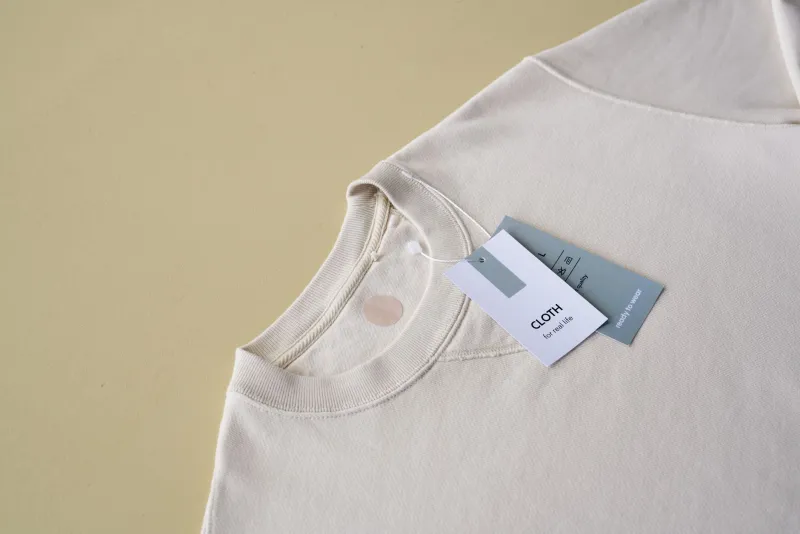
Product photos are styled. Star ratings are averaged across strangers with different bodies, different washing machines, and different patience levels. The tag, though, is a spec sheet. It is the one part of an online listing that tells you what a garment is actually made of before it lands on your doorstep — and reading it takes about as long as deciding whether you want free shipping.
This isn't a textiles lecture. It's a checkout habit. Below is the order I run through before adding anything to my cart, plus the red flags that have saved me from more itchy sweaters and see-through tees than any review ever has.
Fiber comes first, and it's ranked
Fiber content is listed by weight, biggest share first. That order alone answers half your questions. A tee listed as 100% cotton behaves like a tee. A tee listed as 60% cotton, 40% polyester is a different animal — softer up front, warmer than it looks, and prone to holding onto odor a little longer. Neither is wrong. They're just not the same purchase, even when the product photo is identical.
The gap between the fiber line and the marketing copy is where most disappointment lives. "Wool blend" sounds cozy until you read that the blend is 55% acrylic, 30% polyester, and 15% wool. That sweater will feel great in the fitting room and pill by mid-December. Same goes for cashmere: if the word "cashmere" appears in the name but the tag lists it third at 12%, you're paying for the label, not the fiber.
Two numbers worth tucking away: a cotton tee with a small hit of elastane will hold its shape through the wash, and a merino sweater above roughly 80% wool tends to keep its smooth face for more than one season.
The stretch percentage is a durability clue
Elastane, spandex, and Lycra are the same thing wearing different name tags. What matters is the number next to it.
- Under 1%: basically decorative. It will not rescue a stiff waistband.
- 2–3%: the sweet spot for denim and woven shirts that need to move with you.
- 5–8%: leggings and ponte knits territory.
- 10% and up: activewear, and it should be labeled as such.
A garment advertised as "stretch" with no percentage listed is worth a second look. So is denim that lists zero stretch but shows a model doing a deep lunge. One of those two things is not telling the truth, and it isn't the tag.
Lining: the difference between a skirt and a shadow puppet
This is the detail most of us skip, and it's the one that decides whether a piece leaves the house. A light-colored skirt or dress in viscose, rayon, or a thin bamboo jersey will be sheer the moment the sun is behind you. If the listing says "fully lined" or "bodice lined," you're fine. If it's silent, assume it isn't.
Tees and white button-downs deserve the same scrutiny. Look for words like interlock, two-ply, or "opaque" — or check the fiber. A dense cotton holds its own; a slinky viscose jersey is a different garment at noon than it was at 7 a.m.
Care instructions are a lifestyle disclosure
"Dry clean only" isn't a warning about the fabric. It's a warning about your calendar and your budget. Not every such tag is a dealbreaker — a tailored wool coat earns its trip to the cleaner. The trap is a $45 everyday blouse that costs $14 to clean and gets worn twice a month.
Run the math before checkout. If a piece needs dry cleaning and you'd wear it weekly, that's roughly $700 a year in upkeep on a garment that cost less than a nice dinner. Suddenly the machine-washable version looks like the smarter buy, even at a higher sticker price.
Other phrases that deserve a pause: "wash separately" (expect dye bleed for the first few washes), "do not tumble dry" (fine, if you actually own a drying rack), and "hand wash cold" (fine, if you've ever followed through). Be honest with yourself about which of those you'll keep up with in February.
The red-flag checklist
Run this before you hit buy:
- A sweater where acrylic is the first-listed fiber and you want it to last more than one winter.
- "Dry clean only" on a cheap, high-frequency basic.
- No lining listed on a light-colored skirt, dress, or wide-leg pant.
- The word "stretch" with no elastane percentage anywhere on the page.
- A summer top that leads with polyester and has no breathability claim.
- Viscose or rayon in a structured piece — beautiful on arrival, prone to shrinking and wrinkling by wash two.
- A care tag that's described as "attached" but never actually shown in the listing photos.
- Fiber content hidden behind a "materials" tab that just repeats the marketing copy.
Any single flag isn't a no. Three flags on one item usually is.
Read it in the cart, not on the doorstep
Here's the practical advantage of doing this before checkout: returns cost time, and sometimes money. Restocking fees, final-sale exclusions, and the general hassle of repackaging a sweater you already know you'll never wear are all avoidable. The tag is the cheapest return you'll ever make — because it happens before the package ships.
That matters most right now, mid-November, when carts fill up fast and the holiday return window gets crowded. A few seconds on the fiber line now beats a January spent explaining to a customer service rep why the "cozy knit" felt like sandpaper.
A three-second habit, in order
Fiber. Stretch. Lining. Care. That's the sequence. Fiber tells you how it'll feel in six months, stretch tells you how it'll hold its shape, lining tells you whether you can wear it outside, and care tells you what it'll cost to keep.
Do it twice and it becomes automatic — the same way you check the size chart or skim the shipping estimate. Your cart gets smaller, your closet gets more honest, and the pieces that arrive tend to be the ones you actually keep. That's the whole point of shopping with a little strategy: fewer surprises in the box, more outfits on the other side of it.